
Buying an Akiya in Snow Country: Winter Costs & Checks
Buying a snow-country akiya in Japan? Learn winter costs for heating and snow removal, roof-load checks, access risks, and what to inspect before you offer.
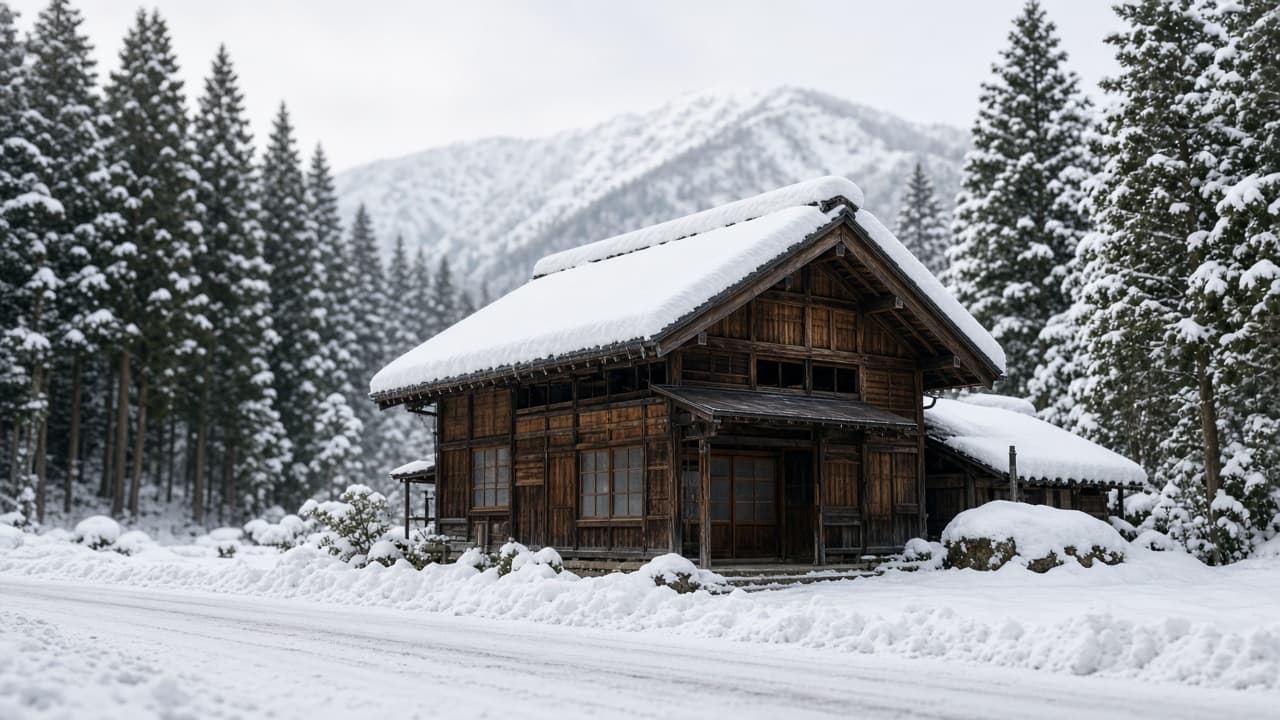
Cheap listings cluster in Japan’s snow country (雪国, yukiguni) for a reason. Deep winters, aging roofs, and long contractor waitlists turn a ¥1–3M purchase into a seasonal project—beautiful if you plan for it, punishing if you buy from summer photos alone.
This guide covers what buying an akiya in snow country actually involves in 2026: realistic winter costs, what to inspect before you offer, access and empty-house risks, and how prefecture trade-offs differ. It is practical orientation, not engineering or legal advice—use a licensed realtor (宅地建物取引士), architect (建築士), and local contractors for your deal.
In this article
- What “snow country” means for buyers
- Winter costs you should budget for
- Roof, structure, and heating inspection checklist
- Access, contractors, and leaving the house empty
- Prefecture trade-offs (without a “best” ranking)
- Key takeaways and FAQ
What snow country means for property buyers
Yukiguni is not a marketing label. It describes regions that see heavy, sustained snowfall from roughly November through March—often measured in meters of accumulation on roofs and roads. Common search areas for foreign and domestic buyers include:
- Tohoku: Akita, Yamagata, Aomori, inland Iwate
- Hokuriku / Japan Sea side: Niigata, Toyama, Fukui
- Mountain belts: inland Nagano, parts of Gifu and northern Gunma
- Hokkaido: different building culture, but the same winter logic at scale
Low asking prices often reflect depopulation, distance from services, and holding costs—not a hidden bargain factory. For the full purchase path, see How to Buy an Akiya in Japan in 2026.
Winter costs: heating, snow, and the “cheap house” trap
Treat winter as a line item in your all-in budget, not a surprise after closing.
Heating (灯油 and alternatives)
Most older rural homes in snow country still run primarily on kerosene (灯油, tōyu): portable fan heaters, floor-mounted stoves, or boiler-fed systems. Outdoor tanks are common; delivery trucks refill them through winter if the road stays open.
Budget orientation (varies widely by insulation and climate):
| Item | Rough range | Notes |
|---|---|---|
| Deep-winter fuel | Often tens of thousands of yen per month | Poor insulation multiplies burn rate |
| Boiler / heater replacement | Hundreds of thousands of yen | Age and leak risk matter on outdoor tanks |
| Insulation / window upgrades | Highly variable | Usually cheaper than years of wasted fuel |
Electric heat pumps and pellet stoves appear in renovated homes, but assume kerosene logistics until you confirm otherwise on site.
Snow removal and roof work
Who clears the roof, driveway, and street-facing paths?
- Steep snow-shedding roofs (落雪屋根) can dump snow into yards and onto neighbors’ boundaries—ask about landing zones and local etiquette
- Low-pitch or flat roofs often need manual clearing or melt systems (融雪); hiring crews several times a season is normal in deep-snow towns
- Some municipalities expect owners to manage snow that threatens roads or passersby
Community snow duty, private plow contracts, and roof-clearing labor are recurring costs. If you will be overseas in January, price a local caretaker before you buy.
Holding costs that spike in winter
Beyond fuel and plowing:
- Travel for emergency visits when pipes freeze or roofs leak
- Insurance and repair deductibles after ice-dam or wind-driven snow damage
- Vacant-period risk if the house sits cold and damp for months
A low purchase price that ignores winter is not cheap—it is unfinished math.
What to inspect before you buy (snow-specific)
Photos shot in May hide December. If you can, view in winter or early spring melt; if not, hire someone who knows local snow loads.
Roof and structure
Ask and verify:
- Roof type and pitch — Metal roofs common in heavy-snow zones shed better than heavy clay tile (kawara); tile in deep yukiguni is a caution flag, not character
- Snow load design (積雪荷重, sekisetsu kajū) — Municipalities publish vertical snow-depth / load assumptions; older homes may not match current expectations. Confirm with an architect or structural inspector, not the listing headline
- Ridge and rafters — Sagging ridgelines, bowed beams, and attic moisture after snow seasons signal cumulative damage
- Snow guards / gutters — Missing or broken drainage channels water into walls and foundations during melt
- Rebuild realism — If a major rebuild is in your plan, confirm road access and rebuild rights early (many rural traps are legal, not just structural)
For sequencing repairs after purchase, kominka renovation tips on roof-first logic still apply—moisture and structure before kitchens.
Heating, plumbing, and freeze risk
On site (or via inspector):
- Turn on heating; note smell of fuel, age of outdoor tank, and whether delivery trucks can reach the tank in snow
- Check for past freeze damage: split pipes, replaced sections, water stains near exterior walls
- Confirm shutoff and drain-down procedures if the house will sit empty
- Ask whether the septic or well has winter access issues (covers buried under snowbanks are a real problem)
Access and site
Walk (or plow) the approach:
- Can a contractor van or dump truck reach the site after a storm?
- Is the access road public, private, or shared—and who plows it?
- Where does roof snow land relative to the neighbor’s property and your own entry?
Exploring land or akiya in Japan? Try AkiMap’s beta map—start with your lifestyle and browse vacant homes across Japan.
Access, contractors, and empty winters
Snow country is where logistics beat aesthetics.
Contractors: Fewer competing builders, longer waits after typhoon or snow seasons, and travel surcharges for remote valleys. Get rough quotes before you assume a ¥2M listing plus “light reno” is livable by next winter.
Empty houses: If you buy as a second home or while still overseas, cold + humidity + delayed leak detection is a classic failure mode. Budget for:
- A local contact who can check after storms
- Heat or controlled ventilation strategy (not “leave it freezing and hope”)
- Insurance that matches actual use (vacant vs occupied terms differ)
Community: Rural winters are social infrastructure as much as weather. Introduce yourself at the municipal office early; ask how neighbors handle shared plowing and whether foreign owners are expected to join seasonal duties. Respect matters more than perfect Japanese—but someone bilingual helps.
Prefecture trade-offs (a framework, not a ranking)
There is no single “best” snow-country prefecture. Use a shortlist filter:
| Factor | Ask yourself |
|---|---|
| Snow depth & duration | Can you (or a caretaker) manage this roof and driveway every year? |
| Rail / airport access | How many hours from your real life in Tokyo, Osaka, or overseas? |
| Contractor density | Are builders available within a practical drive? |
| Services | Grocery, clinic, fuel delivery in deep winter? |
| Price vs all-in cost | Does a cheaper inland listing erase savings in fuel, travel, and reno? |
Examples of how buyers often trade off (illustrative, not advice):
- Niigata / Nagano corridors — Heavier snow in places, but stronger Tokyo rail access than deep Tohoku for many weekend or hybrid lifestyles
- Akita / Yamagata — Often lower asking prices and active relocation messaging; winters and distance are the price of admission
- Hokkaido — Different stock and heating culture; treat as its own diligence track, not a Tohoku clone
Shortlist two or three municipalities, then go deep on local banks, agents, and winter reality—do not browse the whole country from a summer couch.
Key takeaways
- Snow-country akiya prices look low because winter work is the product
- Budget heating + snow clearing + caretaker as recurring costs, not one-time fees
- Inspect roof type, snow load, heating tanks, freeze history, and plow access before you offer
- Empty winters need a plan; overseas ownership without local eyes is high risk
- Choose region by access and contractors, not postcard snow alone
FAQ
Is snow country a bad place to buy an akiya?
No—if you want winter landscape, ski or onsen access, space, and lower purchase prices, it can fit. It is a bad place to buy if your plan assumes summer-only maintenance, weak roofs, or no budget for fuel and plowing.
Can I view only in summer and still buy safely?
You can, but you should compensate: hire a local inspector familiar with snow load and freeze damage, ask neighbors about plow routes, and get roof/heating quotes before closing. Winter or early-melt viewings are still better when possible.
Do I need special insurance for heavy snow?
Policies and exclusions vary. Ask explicitly about snow and ice damage, vacant-home status, and roof collapse scenarios. Do not assume a standard city condo policy mindset transfers to a rural yukiguni house.
Will municipal grants cover winter upgrades?
Sometimes renovation or relocation subsidies exist, but eligibility often ties to residency, renovation scope, or Japanese-language processes. Confirm with the specific municipality; grants are not automatic with the purchase.
What is the single biggest red flag on a snow-country listing?
A tired or low-pitch roof with no clear snow-management story—plus no plan for who clears access when you are away. Structure and logistics fail before interior finishes matter.
Next step
If snow country still fits your use case, narrow regions first, then search listings with winter costs in the spreadsheet. When you are ready to explore freehold plots and vacant homes across prefectures, try the AkiMap beta map.