
Where to Live Near Japan’s Ski Resorts: Location Guide
Where to live near Japan’s ski resorts in 2026—choose by use case, compare resort belts, weigh base vs satellite towns, and check year-round services.
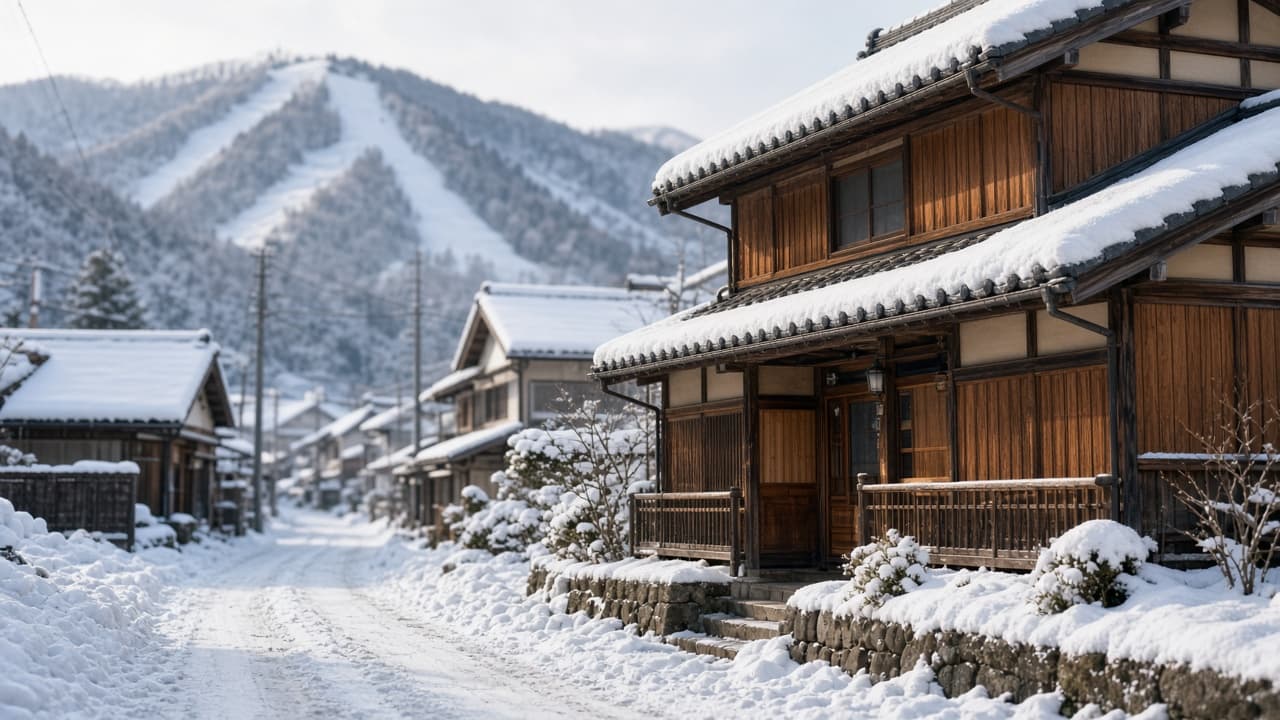
Want powder mornings and a Japanese address? The hard part is not finding a ski resort—it is deciding where to live near Japan’s ski resorts in a way that matches how you will actually use the house.
Lift-base villages, satellite towns 20–40 minutes out, and deeper rural akiya (空き家, vacant homes) all sit under the same mountain sky. Prices, English services, summer emptiness, and winter logistics do not. This guide is a location framework for foreign and domestic buyers—not a “best resort” ranking and not investment advice.
For winter building costs and roof checks, see Buying an Akiya in Snow Country. For the purchase process, see How to Buy an Akiya in Japan in 2026. Ownership still does not create a visa—read Can Foreigners Buy Property in Japan? if that myth is still in play.
In this article
- Decide your use case before you pick a mountain
- What “near the resort” really means
- Major ski belts compared (without a winner)
- Base village vs satellite town vs deep rural
- Year-round living checklist
- How to shortlist on a map
- Key takeaways and FAQ
Decide your use case first
Location mistakes usually start with a postcard, not a use case. Pick one primary mode:
| Use case | What you optimize for | Common trap |
|---|---|---|
| Full-time home | Clinic, grocery, schools, summer work, community | Buying only for ski-week vibes |
| Ski-season base | Lift access, winter plowing, empty-house plan | Underestimating off-season damp and caretakers |
| Weekend / hybrid | Rail or flight from your real life (Tokyo, Osaka, overseas) | Remote powder with terrible midweek logistics |
| Renovation project | Contractors, road access, rebuild rights | Paying resort markup for a gut job |
If you need long-term stay rights, treat visa planning as a parallel track. Buying land or an akiya does not grant residency.
What “near a ski resort” really means
“Near” is a winter measurement:
- Walk / shuttle to lifts — highest prices, densest English services, tourism noise, thin year-round housing for locals and workers
- 15–30 minute drive — often the sweet spot for buyers who want snow without Hirafu-level premiums
- 45–90 minute drive — cheaper stock, weaker resort infrastructure, still real yukiguni (雪国, snow country) costs
Also ask: does “near” mean one resort, or a valley of resorts (e.g. Hakuba’s multi-area shuttles)? Multi-resort living rewards a car; single-base living can work with buses in peak season—and strand you in April.
Major ski belts compared (a framework, not a ranking)
These belts dominate foreign-buyer conversations. Treat the notes as orientation—local streets vary block by block.
| Belt | Access pattern | Livability notes | Property vibe (broadly) |
|---|---|---|---|
| Niseko / Kutchan (Hokkaido) | Flight to New Chitose + road transfer | Most international services; strong winter economy; housing pressure in core areas | Highest resort premiums; satellite towns (e.g. Kutchan) draw overflow demand |
| Furano & central Hokkaido | Flight + drive; less “global village” than Niseko | Dual-season tourism (winter ski, summer nature) helps year-round mood | Often lower entry than Niseko; thinner English stack |
| Hakuba Valley (Nagano) | Shinkansen toward Nagano + bus/car (~3 hours from Tokyo class) | Spread-out resorts; car helps; growing foreign community and schools in the wider valley | Mid-premium vs Hokkaido brand names; strong hybrid-Tokyo use case |
| Nozawa Onsen (Nagano) | Rail + bus/car from Tokyo corridor | Compact onsen village character; quieter than Niseko nightlife | More “village living”; still snow-country holding costs |
| Myoko / Niigata side | Rail-accessible Japan Sea snow | Heavy snow culture; less global branding than Niseko | Often value-oriented relative to headline resorts |
There is no universal “best.” Tokyo-anchored buyers often shortlist Nagano corridors. Powder-first seasonal buyers often shortlist Hokkaido. Full-time settlers should weight clinics, jobs, and summer boredom harder than vertical drop.
Exploring land or akiya in Japan? Try AkiMap’s beta map—start with your lifestyle and browse vacant homes across Japan.
Base village vs satellite town vs deep rural
Lift-base / resort village
Pros: Walkability in season, rentals and English shops, easier short stays.
Cons: Peak pricing, tourist traffic, worker housing shortages in hot markets, thin “normal life” groceries in shoulder seasons.
Satellite town (15–40 minutes)
Pros: More everyday Japan—supermarkets, city hall, sometimes schools; often better all-in value.
Cons: Winter driving is non-negotiable; you live the commute every powder morning.
Deep rural akiya / farmland edge
Pros: Space, lower asking prices, authentic village pace.
Cons: Long contractor waits, well/septic realities, empty winters if you travel, community expectations. Read the snow-country inspection guide before you romanticize a ¥2M listing.
A useful rule: buy the lifestyle radius you will drive in a whiteout, not the radius you drove once in May.
Year-round living checklist
Before you fall for a slope-side photo, verify summer and shoulder-season life:
- Grocery and fuel within a realistic winter drive
- Clinic / hospital distance on snow days
- Internet (fiber vs mobile-only valleys)
- Plow routes — who clears your street and when
- Off-season economy — will you be lonely or underemployed from April to November?
- Car reality — license transfer, winter tires, parking that does not bury the house exit
- Language — how much Japanese you need for city hall, contractors, and neighbors
- Empty-house plan — caretaker, heat strategy, leak checks if you leave for months
Resort towns can feel English-easy in January and Japanese-only in August. Plan for both seasons.
How to shortlist on a map
A practical shortlist workflow:
- Choose use case (table above)
- Choose access hub (Narita/Haneda, Kansai, New Chitose, Nagano shinkansen)
- Pick two belts max (e.g. Hakuba valley + Nozawa, or Niseko–Kutchan + Furano)
- Inside each belt, compare base vs satellite drive times on a winter weekday assumption
- Only then open listings—price, land size, and akiya condition
Prefecture filters and map search help once the radius is honest. Jumping straight into nationwide “cheap ski house” browsing is how people buy the wrong mountain.
When you are ready to browse freehold plots and vacant homes across prefectures, try the AkiMap beta map.
Key takeaways
- Use case first, mountain second
- “Near the resort” is a winter commute, not a summer photo
- Base villages buy convenience; satellite towns often buy livability and value
- Hokkaido vs Nagano is largely an access and community choice, not a snow purity contest for most buyers
- Year-round services and empty-season plans matter as much as powder days
- Ownership ≠ visa; winter holding costs still apply—see the snow-country guide
FAQ
Where is the best place to live near ski resorts in Japan?
There isn’t one. Full-time residents usually need services and summer life; seasonal skiers optimize for lifts and English infrastructure. Shortlist by use case, then compare two belts—not twenty resorts.
Is Niseko too expensive for a normal home?
Core resort pockets often price like international ski markets. Many buyers look at satellite towns nearby for more ordinary housing stock. Always compare all-in winter costs, not only purchase price.
Is Hakuba better for people who visit Tokyo often?
Often yes for rail-linked hybrid lifestyles, depending on your exact village and transfer tolerance. Hokkaido usually means flights. Test the door-to-door winter trip before you buy.
Can I live in a ski town year-round as a foreigner?
You can own without a visa in most ordinary cases, but living long-term requires a valid residence status. Seasonal work patterns are common; year-round employment takes planning. This is not immigration advice—confirm with professionals.
Should I buy an akiya next to the gondola?
Usually no—unless you have priced renovation, snow load, and tourism rules carefully. Many akiya bargains sit outside the lift base. Inspect like a skeptic and use licensed local professionals.
Do I need a car?
In most mountain setups, yes for full-time or satellite-town living. Peak-season buses help tourists; they do not replace a household car for grocery runs and shoulder seasons.