
Best Ski + Onsen Towns in Japan (2026)
Compare the best ski and onsen towns in Japan for 2026—Nozawa, Myoko, Zao, and more—plus access tips and what to check before living nearby.
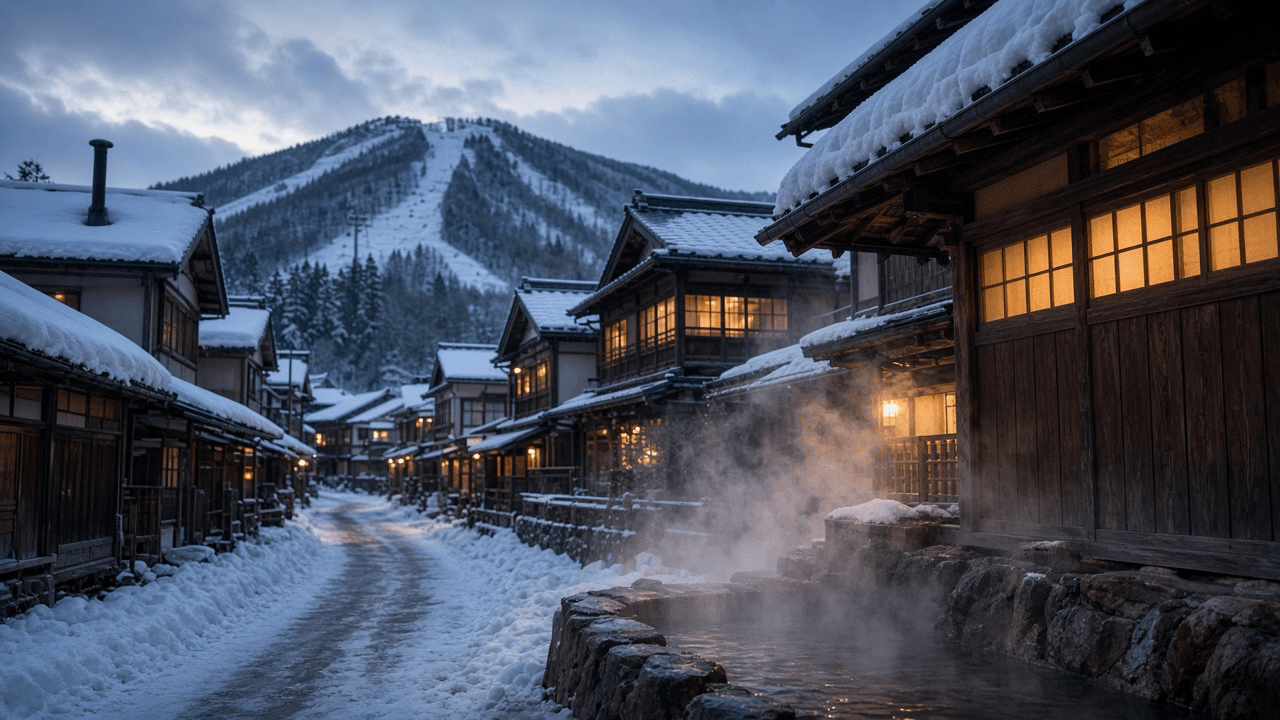
Japan’s best winter trips are not only about vertical drop. The places that stick are ski + onsen towns: walkable hot-spring villages where you ski (or ride) by day and soak in a public bath or ryokan that night—then maybe start wondering what it would take to stay longer.
This is a practical shortlist of the best ski onsen towns in Japan for 2026, written for travelers and for people already thinking about snow-country homes. It is not a lift-ticket ranking and not investment advice. For housing logistics, pair it with Where to Live Near Japan’s Ski Resorts and Buying an Akiya in Snow Country.
In this article
- What counts as a ski + onsen town
- How this list was chosen
- Five standout ski onsen towns
- Quick comparison table
- If you want to live there, not only visit
- Key takeaways and FAQ
What counts as a ski + onsen town
A resort hotel with a spa is not the same thing as a hot-spring village. For this list, a town earns a place when all three are true:
- Real skiing nearby — a proper ski area you can reach without a multi-hour expedition every morning
- Real onsen culture — public baths (sotoyu), communal springs, or a dense ryokan/onsen street—not only hotel pools
- A walkable base — steamy lanes, shops, and a sense that people live here when the powder circus leaves
That filters out pure “lift village” bases and pure onsen destinations with no serious skiing.
How this list was chosen
Each town was scored on:
| Factor | Why it matters |
|---|---|
| Onsen character | Public baths, sulfur culture, village ritual |
| Snow & terrain | Powder reputation, variety, reliability |
| Village feel | Walkability, year-round life vs one-season strip |
| Access | Rail/bus/airport reality from Tokyo or Sapporo |
| Living potential | Whether a base or satellite town could work for longer stays |
Names are ordered as a shortlist to research, not a rigid #1–#5 scoreboard. Conditions, crowds, and lodging change every season.
1. Nozawa Onsen (Nagano) — the classic combo
If you want one town that defines ski + onsen in Japan, start here. Nozawa sits under a large, varied ski area and keeps a proper village core: narrow streets, steam vents, and 13 free public bathhouses maintained by neighborhood associations. Skiing has deep local roots here, and international visitors are well catered for without erasing the onsen rhythm.
Best for: First-time visitors who want powder and bathhouse culture in one walkable place.
Watch-outs: Peak weeks feel busy; public baths run very hot—enter slowly and follow local etiquette.
Living angle: Strong seasonal economy; for full-time life, compare the village to satellite towns with bigger groceries and clinics (see the location guide).
2. Akakura Onsen / Myoko Kogen (Niigata) — powder with quieter streets
Myoko Kogen is a cluster of ski areas under Mount Myoko, with heavy Japan Sea snow and less global branding than Niseko or Hakuba. Most foreign visitors base around Akakura Onsen: hot springs at the foot of the mountain, several ski areas within a short drive, and a calmer night scene than the big-name valleys.
Best for: Powder-focused skiers who still want onsen evenings and fewer “resort strip” vibes.
Watch-outs: Multiple hills mean planning (pass, shuttle, or car); English density is thinner than Nozawa or Niseko.
Living angle: Often mentioned as better value relative to headline resorts—verify winter access and snow load before chasing a cheap akiya (空き家, vacant home).
3. Zao Onsen (Yamagata) — sulfur steam and snow monsters
Zao Onsen is moodier theater: acidic sulfur springs, ropeways, and the famous rime-ice “snow monsters” on the upper mountain. The ski area is large and scenic; the town’s onsen identity is unmistakable.
Best for: Travelers who want a dramatic mountain + distinctive baths, not only groomers.
Watch-outs: Wind can shut upper lifts; some terrain feels flat for snowboarders if you pick the wrong lines; snow reliability varies more than Hokkaido’s coldest spots.
Living angle: Closer to Yamagata city services than deep alpine villages—useful if you want mountains without total isolation.
4. Yudanaka–Shibu Onsen (Nagano) — hot-spring streets near Shiga Kogen
Yudanaka and Shibu Onsen are classic castle-town / Edo-style onsen streets in the Jigokudani snow-monkey corridor. They are not ski-in/ski-out villages, but they are a serious onsen base for Shiga Kogen—Japan’s huge linked ski complex—and other nearby hills with a bus or short drive.
Best for: Soakers who want historic bath streets and are fine commuting to a mega ski area.
Watch-outs: Morning transfers matter; you are optimizing village culture over doorstep lifts.
Living angle: Strong year-round tourism identity; property search should separate “pretty onsen street” from practical winter parking and plow routes.
5. Nyuto Onsen / Lake Tazawa corridor (Akita) — rural baths, quieter snow
Northern Honshu’s Nyuto Onsen cluster is famous for thatched bathhouses and a slower rural pace. Pair it with nearby Akita ski areas (and Lake Tazawa as a locality anchor) for a trip that feels farther from the international circuit.
Best for: Travelers who want deep countryside onsen culture and can accept smaller or less famous ski hills.
Watch-outs: Not a single mega-resort brand; logistics and English support take more work.
Living angle: This is snow-country reality—beautiful summers, serious winters. Read snow-country winter costs before you romanticize a listing photo.
Exploring land or akiya in Japan? Try AkiMap’s beta map—start with your lifestyle and browse vacant homes across Japan.
Quick comparison
| Town | Prefecture | Onsen vibe | Ski character | Access snapshot |
|---|---|---|---|---|
| Nozawa Onsen | Nagano | 13 public sotoyu, walkable village | Large, varied, popular with internationals | Rail + bus via Iiyama / Nagano corridor |
| Akakura / Myoko | Niigata | Onsen base under Mt. Myoko | Heavy powder, multi-resort cluster | Myoko Kogen Station + short taxi/shuttle |
| Zao Onsen | Yamagata | Strong sulfur baths | Big scenic area, snow monsters | Via Yamagata; check wind days |
| Yudanaka–Shibu | Nagano | Historic onsen streets | Gateway to Shiga Kogen scale | Nagano region buses / local rail |
| Nyuto corridor | Akita | Rural bathhouse cluster | Quieter regional skiing | More planning; less “international default” |
If you want to live there, not only visit
A great ski week and a good year-round address are different problems. Before you hunt land or an akiya near any of these towns:
- Separate resort week from residency — visas and ownership are not the same (foreign buyer myths).
- Budget winter holding costs — heating, snow removal, roof load, empty-house plans.
- Test a whiteout commute — the drive you did in May is not the drive you will do in February.
- Prefer satellite towns for daily life when the onsen street is beautiful but thin on clinics and groceries.
- Talk to locals and a licensed realtor (宅地建物取引士) before you treat a travel ranking as a purchase shortlist.
Key takeaways
- Ski + onsen towns combine real skiing, real bath culture, and a walkable base—not only a hotel spa.
- Nozawa is the clearest all-rounder; Myoko/Akakura leans powder and quiet; Zao leans sulfur drama and scenery.
- Yudanaka–Shibu trades doorstep lifts for historic onsen streets near Shiga Kogen.
- Nyuto’s corridor suits rural bath culture and quieter snow—with more logistics.
- Living nearby needs a separate checklist from planning a holiday week.
FAQ
What is the best ski onsen town in Japan for first-timers?
Nozawa Onsen is the usual answer: strong skiing, dense public-bath culture, and enough English infrastructure to reduce friction without feeling like a pure export resort.
Is Niseko a ski + onsen town?
Niseko has excellent skiing and many hotel/ryokan baths, but it behaves more like an international resort hub than a traditional sotoyu village. Great trip; different category than Nozawa or Shibu.
Can foreigners buy a house near these towns?
In general, yes—ownership is not blocked by nationality—but buying does not create a visa. Process and title checks still apply; start with Can Foreigners Buy Property in Japan? and How to Buy an Akiya in Japan in 2026.
Are public onsen free?
In places like Nozawa, many neighborhood public baths are free or very cheap, with strict etiquette (wash first, tattoos policies vary, no swimwear). Ryokan baths for overnight guests follow house rules.
Should I buy in the onsen street itself?
Not by default. Peak tourist streets can mean parking stress, noise, and thin year-round services. Many buyers do better in a nearby satellite town and treat the onsen village as their winter amenity.
When you are ready to compare snow-country listings across prefectures—not only resort marketing pages—try the AkiMap beta map.